
How It Works
A different way of doing therapy. The same clinical ground.
You will still be listened to and understood. But understanding is not where the work ends — the goal is change that shows up in your actual life.
See it. Work on it. Practice it. Live it.
Insight is the beginning, not the destination. Every phase of the work points toward something you can do differently outside the therapy room.
- 01
See it
Identify what is actually happening — the pattern, the trigger, and what keeps repeating.
- 02
Work on it
In session: clinical conversation, visual mapping, emotional regulation, and honest reflection.
- 03
Practice it
Between sessions: a specific, doable experiment — a boundary, a conversation, a different response.
- 04
Live it
Review what happened, adjust the plan, and carry the new response into everyday life.
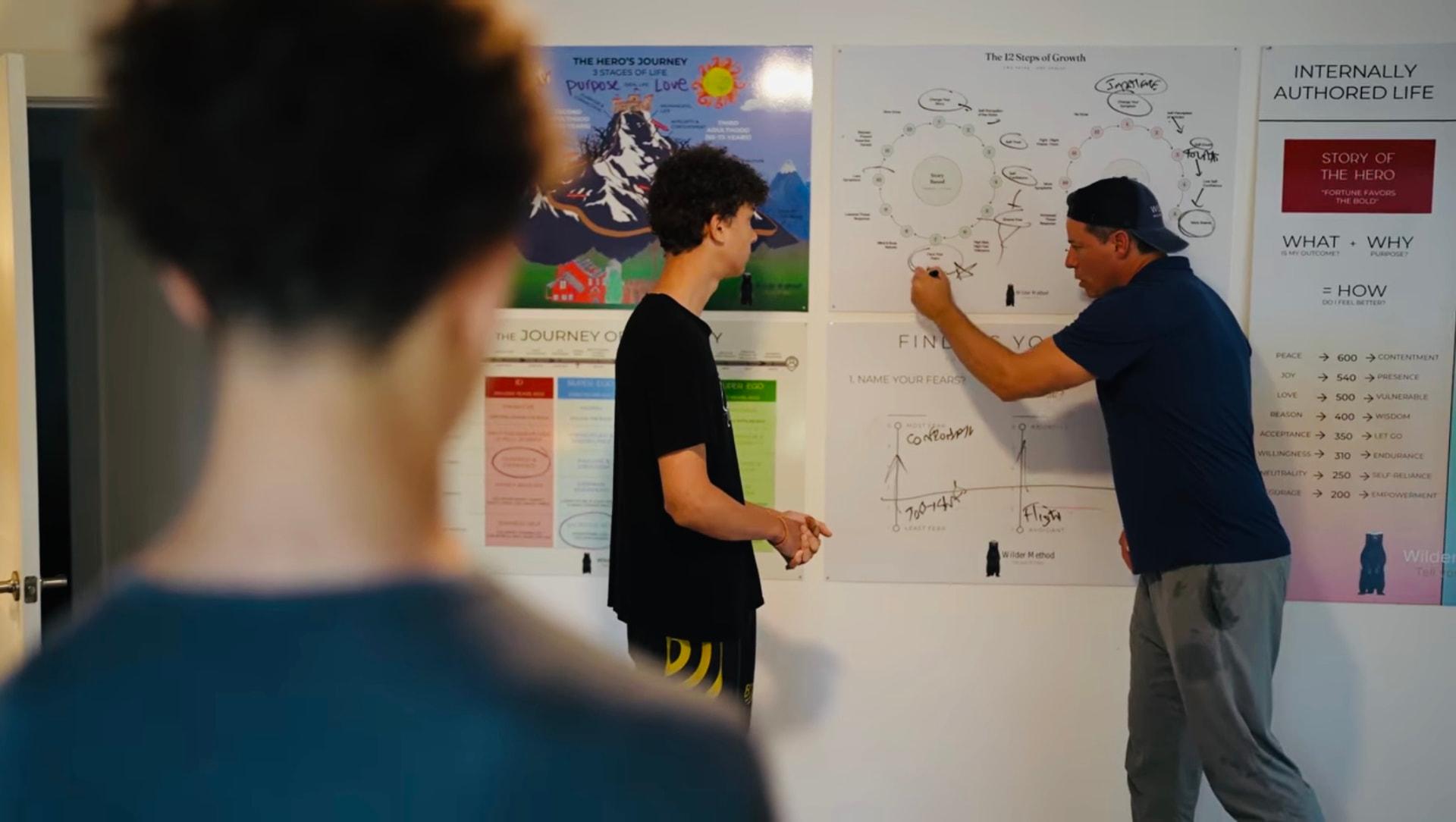
What sessions may include
Sessions are active and practical. The plan is individualized around your symptoms, patterns, goals, and response to treatment.
Explore Therapy & Insurance- Clinical conversation
- Visual mapping
- Identification of recurring patterns
- Assessment when appropriate
- Emotional-regulation work
- Clear treatment goals
- Practical experiments between sessions
- Review of what happened outside therapy
- Adjustment of the plan based on progress
Your starting point is clinical, not sales-driven.
Most people begin with individual therapy. Some add a structured assessment for a clearer map of strengths, patterns, and priorities. Some join a clinical group.
Cold immersion and nonclinical experiential programming are optional, self-pay, and never required to receive individual therapy. Your path is determined by your clinical needs, goals, preferences, and eligibility.
Common questions
- Do I have to do the cold water?
- No. You can work with Bill individually. Enter the Cave is optional, and in the Cave you always choose your own edge.
- How fast do people see change?
- The work is designed to help you begin noticing and practicing meaningful changes in daily life. The timing and results of therapy vary for every person.
- Do you take insurance?
- Insurance may apply to qualifying individual therapy and clinical group services. Contact the practice to begin insurance verification — you'll receive instructions for securely providing what's needed.
- Where are you located?
- Cornelius, North Carolina — serving Davidson, Huntersville, Mooresville and the Lake Norman area.
- What is the Instinctual Drive?
- The older, primitive part of your psyche that acts rather than analyzes. Strengthening your access to it is how you stop overthinking and start moving.
You don’t have to know exactly what kind of help you need.
Tell Bill what is happening and what you want to change. He will help you identify an appropriate first step.
Cornelius, North Carolina · Insurance-based therapy options available